 Request a Free Estimate
Denver Radon Mitigation Services
Denver sits in EPA Radon Zone 1 — the highest-risk radon classification assigned by the Environmental Protection Agency. Colorado’s uranium-bearing granite and granitic soil release radon gas continuously as uranium decays underground. That gas travels through foundation cracks, sump pits, utility penetrations, and exposed crawl-space soil, accumulating in living spaces across Denver’s diverse mix of basement homes, ranch-styles, and newer slab-on-grade construction.
Denver Radon Mitigation is a family-owned radon mitigation contractor serving homeowners and businesses across Denver and the surrounding Denver Metro area.
Family owned & operated • Residential & commercial radon services • Denver Metro & Front Range
Why Denver Homes Need Radon Mitigation
Colorado consistently reports some of the highest average indoor radon concentrations in the country, according to the Colorado Department of Public Health and Environment. The Denver Metro area sits above uranium-rich granitic rock formations that are unusually productive radon sources. Because radon is odorless, colorless, and chemically inert, it accumulates undetected — the EPA and Colorado Department of Public Health and Environment both recommend mitigation when indoor levels reach or exceed 4.0 pCi/L.
Denver’s housing stock creates several distinct mitigation scenarios. Post-WWII basement homes in neighborhoods like Congress Park, Park Hill, and Barnum often have unsealed concrete floors and deteriorating slab edges that provide direct soil-air pathways. Residential radon mitigation addresses these entry points with property-specific system design. Mid-century ranch homes in Harvey Park, Westwood, and Athmar Park frequently have large, contiguous slab footprints with limited sub-slab airflow. Newer developments in neighborhoods like Stapleton (Central Park), Green Valley Ranch, and The Highlands often include passive radon rough-in pipes installed during construction — but passive systems without an active fan rarely reduce radon to safe levels and require activation to function as a true mitigation system.
Without mitigation, prolonged radon exposure is the second leading cause of lung cancer in the United States after smoking, according to the EPA. The solution — a properly installed sub-slab depressurization system or equivalent — consistently reduces indoor radon levels by 50 – 99%. On a recent Denver installation, Denver Radon Mitigation reduced indoor radon from 8 pCi/L to 0.8 pCi/L — a 90% reduction — demonstrating the real-world effectiveness of a correctly designed and installed system.
EPA Zone 1
Highest radon risk classification
Uranium-Rich Geology
Granitic bedrock releases radon
Diverse Foundations
Basements, crawl spaces, slabs

Written by Jaden Waller, Owner
Denver Radon Mitigation • About the company
Radon Mitigation Services in Denver
Denver Radon Mitigation provides the following radon mitigation services across Denver and the surrounding metro communities:
Residential Radon Mitigation
Installation of active radon mitigation systems for Denver single-family homes, townhomes, and condominiums. Each installation begins with a property assessment to determine the appropriate system configuration based on your foundation type, sub-slab conditions, and radon entry points.
Commercial Radon Mitigation
Mitigation planning and installation for Denver commercial properties, including multi-unit residential buildings, office buildings, schools, and childcare facilities. Commercial properties present more complex sub-slab configurations that often require multi-point or zoned systems.
Vapor Barrier Installation
For Denver crawl-space foundations, a properly installed vapor barrier combined with crawl-space depressurization creates an effective radon barrier at the soil surface. Vapor barriers also reduce moisture-related issues common in Denver’s climate cycling between dry and humid conditions.
New-Build Radon System Activation
Many new construction homes in Denver include passive radon rough-in pipes per Colorado building code recommendations. Denver Radon Mitigation installs the active fan and seals passive systems to convert them into functioning active depressurization systems — a faster installation than a full retrofit on a home without rough-in.
Radon System Inspections
If your Denver home already has a mitigation system — whether installed by a previous contractor or included in a home purchase — Denver Radon Mitigation can inspect the system’s components, fan performance, and pressure field extension to verify it is operating correctly.
Post-Mitigation Test Kits
Following system installation, post-mitigation radon testing is required to verify the system has reduced levels below the 4.0 pCi/L action threshold. Denver Radon Mitigation provides post-mitigation test kits and can interpret results.
How Property Conditions Affect Mitigation Planning in Denver
Radon mitigation is not a one-size-fits-all service. Denver’s range of housing types — from 1940s brick basements to 2010s slab-on-grade construction — means that effective mitigation requires property-specific planning. Denver Radon Mitigation reviews the following conditions before recommending an approach:
Foundation Type
Denver homes are built on basements, crawl spaces, slab-on-grade foundations, or combinations of all three. Each foundation type requires a different primary mitigation method. Sub-slab depressurization works for basements and slabs. Crawl-space depressurization or vapor barrier systems address crawl spaces. Homes with mixed foundation types may require a combined approach.
Sub-Slab Communication
The effectiveness of sub-slab depressurization depends on how freely air moves through the material beneath your floor. Loose gravel allows wide pressure field extension from a single suction point. Compacted dirt or heavy clay limits extension and may require multiple suction points. A diagnostic pressure field test before system design identifies the optimal suction point location and fan sizing.
Sump Pit Configuration
Many Denver basement homes have sump pits \u2014 and sump pits are a direct connection between below-slab soil air and indoor air. An existing sump pit can often serve as the primary suction point, simplifying installation and reducing cost. Sealed sump lids with integrated radon extraction are common in Denver mitigation installations.
Existing Passive Rough-In
New-construction Denver homes built after approximately 2005 frequently include a passive PVC pipe extending from below the slab through the structure. If your home has this rough-in, installation primarily involves connecting an inline radon fan, sealing the pipe cap, and verifying sub-slab pressure extension \u2014 a significantly simpler process than drilling a new suction point in a finished basement. For homes with an existing system installed by another contractor, a radon system inspection can verify it is operating correctly.
Interior vs. Exterior Routing
Radon mitigation pipes can be routed through interior chases and discharged above roofline, or run along the exterior of the home and up the exterior wall. Interior routing is aesthetically preferred but requires access through finished spaces. Exterior routing is common in Denver\u2019s brick-exterior homes where interior penetration is more complex. Denver Radon Mitigation discusses both options during property assessment.
Radon Mitigation Cost in Denver
Radon mitigation costs in Denver vary based on foundation type, system complexity, and the number of suction points required. Single-point sub-slab depressurization systems on homes with good sub-slab communication and an accessible rough-in are generally the most economical installations. Multi-point systems, combined sub-slab and crawl-space systems, or installations on homes with difficult sub-slab communication require more labor and materials.
Since January 2026, Denver Radon Mitigation has mitigated radon in more than 75 Denver-area properties, giving us current, firsthand experience with the full range of foundation types and sub-slab conditions found across the city. Request a free estimate from Denver Radon Mitigation to receive a property-specific cost assessment. General pricing context: Colorado mitigation contractors typically quote single-family installations in a range that reflects local material and labor costs — Denver Radon Mitigation will provide a specific written estimate following a property review.
What Denver Homeowners Say
Denver Radon Mitigation is rated 5.0 out of 5 from 3 verified reviews on Thumbtack. Here’s what Denver-area customers have said about their mitigation projects:
“Jaden contacted me soon after requesting Radon Mitigation services. He told me when he could be here and he was right on time. Part of the install was in a hot attic and he never complained. He built the PVC structure to support the radon fan and motor and fully tested those components. He also worked in the basement to cut and install the plexiglass cover over the sump pit and seal with silicone. Then he installed a device to monitor the suction on the PVC pipe to determine if the fan is working properly. He then cleaned up everything afterwards. He left a radon test kit to use after several days to make sure things were working as planned he explained how things work and left his phone number to call if there were any issues. I was very pleased with his effort and he had the best price for the project.”
Bob W.
June 22, 2026
Reviewed on Thumbtack
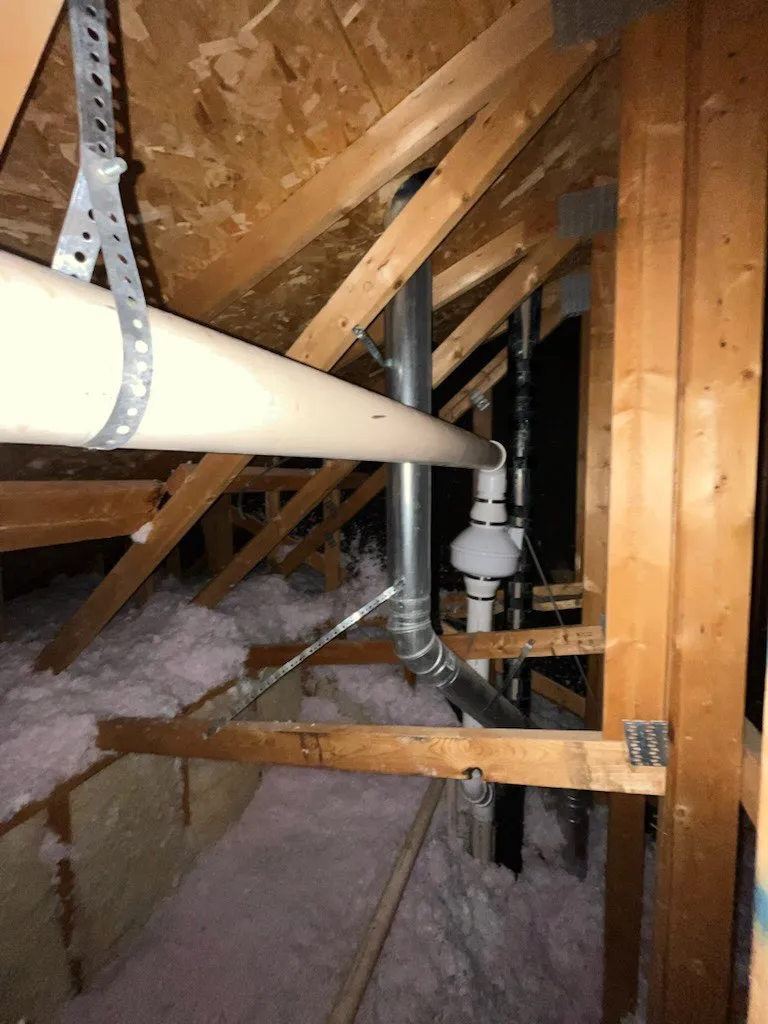
PVC fan support structure
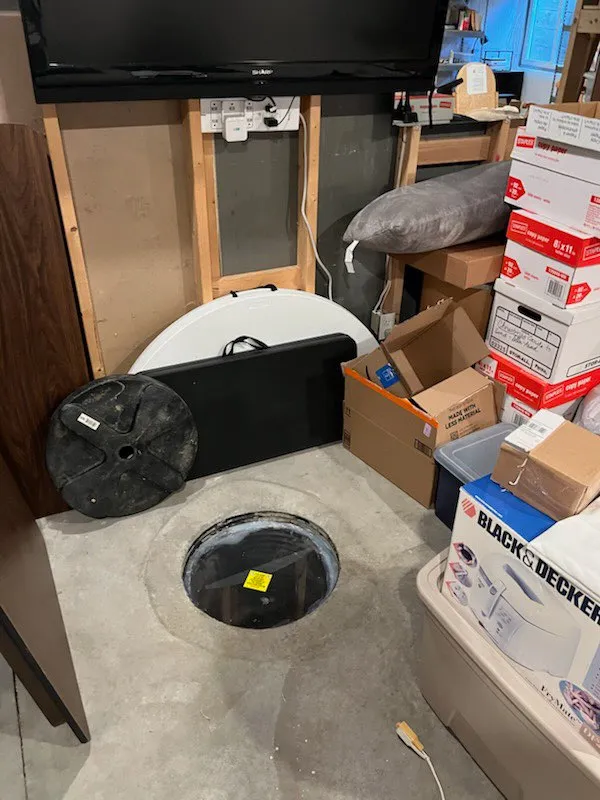
Sealed sump pit cover
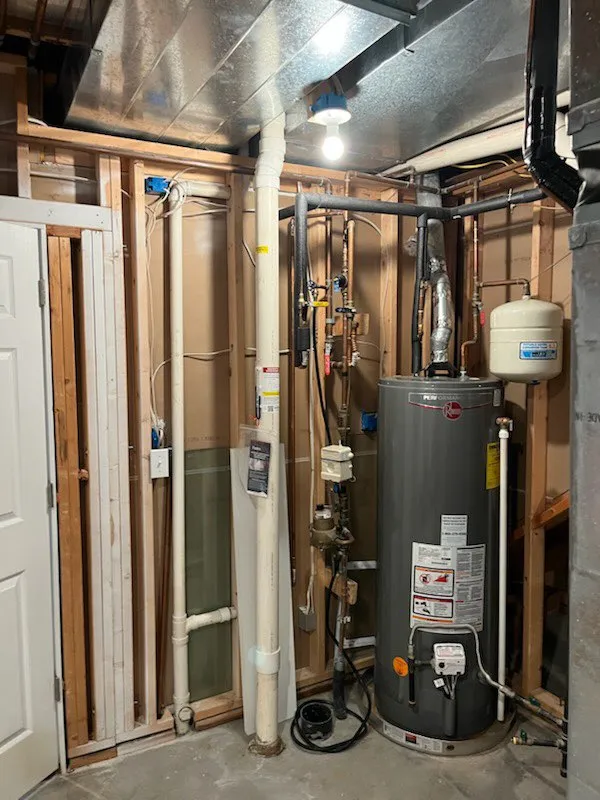
Pipe routing through mechanical room
“Thanks! We are so happy with the work that Denver Radon Mitigation did at our home. Jaden took the time to do things right. Our levels are down where they should be. We would definitely choose Denver Radon Mitigation again.”
Diane W.
June 15, 2026
Reviewed on Thumbtack
“Jaden is a real professional. His communication before, during and after the job was timely and informative. The project itself was effective and carefully done.”
Gerald D.
June 27, 2026
Reviewed on Thumbtack
Denver Neighborhoods and Communities Served
Denver Radon Mitigation serves homeowners and businesses across the City and County of Denver, including:
Central Denver
- Capitol Hill
- Congress Park
- City Park
- Cheesman Park
- Five Points
East Denver
- Park Hill
- Montclair
- Virginia Village
- East Colfax
South Denver
- Washington Park
- Harvard Gulch
- Platt Park
- University Hills
- Hampden
West Denver
- Westwood
- Harvey Park
- Barnum
- Athmar Park
- Sun Valley
North Denver
- Sunnyside
- Globeville
- Chaffee Park
- Berkeley
- Regis
Northwest Denver
- The Highlands (LoHi)
- Jefferson Park
- Sloan Lake
Northeast Denver / New Development
- Stapleton (Central Park)
- Green Valley Ranch
- Montbello
Denver Radon Mitigation also serves surrounding Denver Metro communities including Lakewood, Arvada, Westminster, Aurora, Littleton, Englewood, Centennial, Parker, Thornton, and Broomfield. If your community is not listed, contact us — service area coverage continues to expand across the Front Range.
Frequently Asked Questions — Radon Mitigation in Denver
Radon mitigation costs in Denver depend on your property’s foundation type, the number of suction points required, and whether a passive rough-in pipe is already present. Single-point sub-slab depressurization on a home with an existing rough-in is typically the most cost-efficient installation. Multi-point systems, combined sub-slab and crawl-space installations, and vapor barrier projects require more materials and labor. Contact Denver Radon Mitigation for a free, property-specific estimate.
Yes. Denver sits in EPA Radon Zone 1 — the highest-risk radon zone classification — because Colorado’s uranium-bearing granitic geology releases radon gas continuously. Colorado consistently ranks among the U.S. states with the highest average indoor radon levels. Testing is recommended for all Denver homes, and mitigation is recommended when indoor levels reach or exceed 4.0 pCi/L.
Radon mitigation is not required by law for existing Colorado homes, but it is strongly recommended by the Colorado Department of Public Health and Environment and the EPA when indoor testing shows levels at or above 4.0 pCi/L. Many Colorado real estate transactions now include radon testing as a standard inspection contingency, and buyers often negotiate mitigation as a closing condition when elevated levels are found.
A radon mitigation system — most commonly sub-slab depressurization — uses an inline fan to create negative pressure beneath the foundation, drawing radon gas out of the soil before it enters the home. The system vents the collected gas above the roofline, where it disperses harmlessly into outdoor air. The fan runs continuously and is connected to a pressure indicator (manometer) that shows the system is maintaining suction. Properly installed and maintained systems reduce indoor radon levels by 50 – 99%.
Most Denver residential radon mitigation installations are completed in a single day. Homes with an existing passive rough-in pipe, accessible sub-slab conditions, and straightforward exterior or interior routing are typically the fastest installations. Multi-point systems or combined sub-slab and crawl-space projects may require additional time. Post-installation, a waiting period of at least 24 hours is needed before conducting a post-mitigation radon test.
Yes. A post-mitigation radon test is the only way to verify that the installed system has reduced indoor radon levels below the 4.0 pCi/L action threshold. Denver Radon Mitigation recommends a long-term test (90+ days using an alpha-track device) for the most accurate baseline reading, though a short-term test (48 – 96 hours) can be used as an initial check. Test results should be documented for your home’s records and any future real estate disclosures.
Sub-slab depressurization draws radon from beneath a concrete slab by inserting a suction pipe through the slab and running a fan that creates negative pressure in the air space below. Crawl-space depressurization addresses homes with exposed-soil crawl spaces — either by installing a vapor barrier over the soil and running a depressurization pipe beneath it, or by pressurizing the crawl space itself to prevent radon entry. Many Denver homes have both a slab and a crawl space, requiring a combined approach.
Yes. Denver Radon Mitigation provides radon system inspections for systems installed by any contractor. A system inspection covers fan performance, pipe integrity, suction point sealing, and pressure field extension. System inspections are common during home purchases, when current testing shows levels have increased, or when a fan has failed and the homeowner wants a condition assessment before replacement.
Standard homeowners insurance policies generally do not cover radon mitigation installation costs. However, if radon issues contributed to structural damage (such as moisture infiltration from a compromised foundation), coverage may apply to the related structural repair. Health insurance does not cover radon mitigation. Some Colorado real estate transactions result in seller credits or concessions to cover mitigation costs as part of closing negotiations.
Denver Radon Mitigation offers residential and commercial radon mitigation system installation, vapor barrier installation for crawl-space foundations, new-build radon system activation (fan installation on passive rough-in systems), radon system inspections, and post-mitigation test kits. Each project begins with a property-specific assessment to determine the most effective system configuration for your foundation type and sub-slab conditions.
Request Radon Mitigation Service in Denver
Denver Radon Mitigation serves homeowners and businesses across the City and County of Denver and surrounding Denver Metro communities. As a family-owned contractor, Denver Radon Mitigation reviews each property's conditions before recommending a mitigation approach. Contact us to request a free estimate for radon mitigation, system inspection, or vapor barrier installation in Denver, CO.